
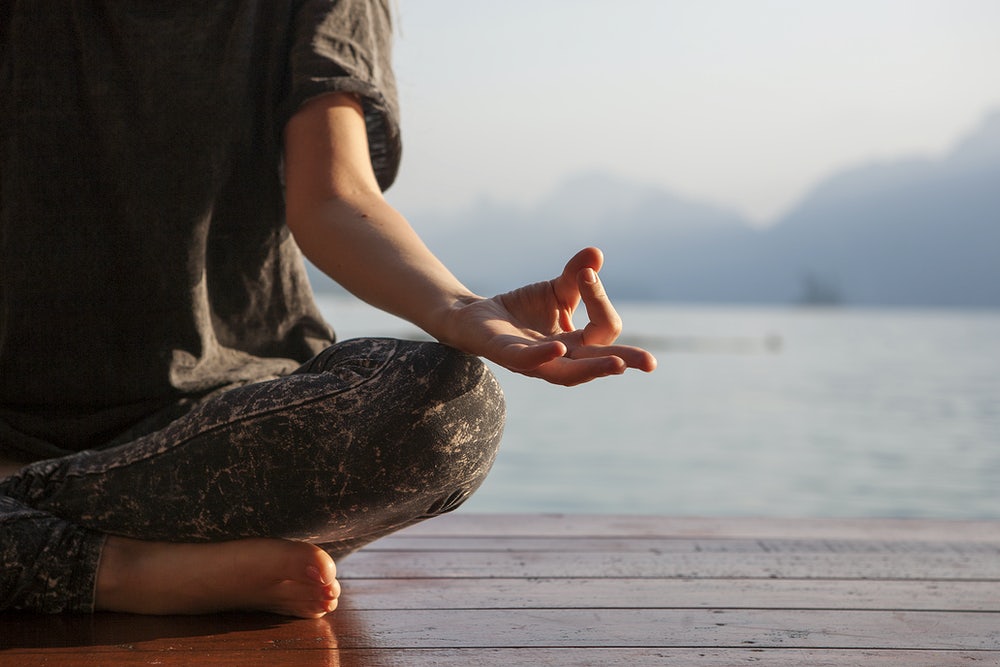
I have been teaching Yoga and Meditation for almost 5 years now and I continue to be surprised by the amount of people who think these practices are not for them.
Meditation has positively impacted my life in such a way that I feel called-to share this practice with others, so they too can experience a calmer, more relaxed, and joyful life.
My intention with this article is to de-bust myths around meditation and share a little about my experience, as well as some interesting scientific research on the benefits of meditation.
We’ll start by defining what meditation is and what it is not by looking at 3 commonly believed myths.
So, What is Meditation?
Meditation is the practice of focusing the mind. The focus depends on the meditation technique, and there are hundreds of them, but focusing on the breath is the most common practice.
Meditation Myths
MYTH #1: Meditation is absolute stillness of mind
This is perhaps the biggest misconception about meditation. Although total cessation of thought for extended periods of time may eventually occur, very few people experience this, and the majority of these individuals practice meditation in isolation for months at a time. Although monastic life is a noble calling, this is not everyone’s life path, however this does not mean that we cannot all practice meditation.

What it means is that we must let go of the idea that we will achieve this stillness of mind the first time we sit down and close our eyes for 5 minutes. This is like expecting to be able to run a marathon the first time you try jogging. The human mind is like a thought machine, it takes time to learn how to manage it, but first we must learn to observe it.
Meditation is the practice of focusing the mind.
The first step is to notice the activity of the mind. Only then, we may be able to detach from it. This does not mean denying the existence of the thoughts, but understanding that they do not define us: we are not our thoughts. We can then notice the thoughts appear, and let them pass without following each one of them. Eventually, the space in-between the thoughts becomes longer; this is what we refer to as conscious presence.
MYTH #2: If I can’t focus my mind, I am failing at meditation
Trying to focus the mind does not mean that it happens instantly. Focusing the mind on one thing is challenging. Practicing meditation requires patience and perseverance. In a society where instant gratification is constantly seeked, a practice like meditation is even more of a challenge.
But rest assured, even if you sit down for 10 minutes and you spend the entire time reflecting, you are doing it! You can’t fail nor succeed at meditation. You may not catch yourself wandering off the 1st few times you sit in silence, but with practice you begin to develop self-awareness and the ability to bring your awareness back to the focus of your meditation.
MYTH #3: Meditation is for naturally calm people
If I got a penny every time someone told me their mind is abnormally busy and chaotic… you know the rest of the sentence. It seems very curious to me that we all seem to think that the activity in our brain is higher than everyone else’s, and not in a good way.
The idea that some people are calm by nature and others are stressed by nature assumes that we are born a certain way and remain that way for the rest of our lives. So if you think of yourself as a stressed or anxious person, as many people seem to think they are, then you just have to accept it is the way it is and live with it.
Well, I have some news for you: this is untrue!
The reality is that although genetic factors provide a significant contribution to variation in brain structures, life circumstances have a major impact on our minds; with childhood and adolescence having a heavily pivotal impact on brain development of course. The exciting news is that research has shown that meditation can change both the brain’s structure and function by enlarging the pre-frontal cortex. This area of the brain is responsible for rational decision-making. Studies have also shown that meditation increases grey matter (brain cells) in this region.
Therefore, regardless of your genetic heritage, upbringing, or current life situation, you can benefit from meditation even though you consider yourself to be either a naturally calm or anxious person.
I’ve already revealed a little about why you may want to meditate but just in case you still aren’t sure, I’ll share a little about my own experience and some scientifically-backed evidence on the benefits of meditation.

So, Why Meditate?
I’d been practicing yoga (asana: the physical aspect) for a few years. I considered myself a happy and relaxed person but these two things largely depended on my activity levels. I loved running, boxing, and doing yoga, so when my physiotherapist informed me that I would have to take a break from it all for some time after dislocating my shoulder, I panicked.
What would I do?
My lack of options led me to decide to finally try meditation. I didn’t know I could do this at home on my own, so I went to a free meditation class in central London.
My first time meditating… Mixed feelings!
As I sat down on a foldable chair in a community hall surrounded by strangers, I realized I had never sat down with my eyes closed unless I was falling asleep on a bus. At first, my mind seemed to be on a rollercoaster, moving in different directions, slowing down, speeding up – I had no control over it.
But somehow by the end of the session, I felt a sense of peace. I didn’t understand what had happened, but I knew I wanted to do it again. I kept going to this group once a week for 6 months and slowly started to introduce a meditation practice in my daily routine.
I started by meditating 5 minutes every morning before doing anything else, then 10, then 15, and today I meditate 30 minutes every day without fail, or almost. There have been times when I meditate one hour a day, and I have to admit I meditated up to 7 hours a day during a 3-day silent retreat and I have noticed a clear positive correlation between my meditation practice and how present I feel in my life.
What ‘Being Present’ Actually Means
Being present does not mean that sh!t doesn’t happen, nor that we don’t care when it happens, but it does mean that we are able to remain in a state of relaxed awareness through it all.
Does this mean that I never get sad or angry? Of course not. Meditation does not make us less human, it simply helps us become more self-aware, more present, and consequently more accepting of ourselves and others. It enables us to be more peaceful and loving and I think we could all agree that the world needs us all to be more of all of the above.
Yogic philosophy says that meditation (Dhyana) can lead us to Samadhi or absolute union, also explained as the dissolution of the self and the non-self, in other words union with the divine, god, the universe, great spirit, or whatever you would like to call it. The reason I mention this last is because meditation is not a religious practice and you do not need to be a seeker or a believer to reap the benefits of meditation. The possible ‘encounter’ with god is just a great perk regular meditators have access to.
But don’t expect fireworks or angels playing flutes, according to enlightened teacher Sri Ramana Maharshi. “God is the silence in between the thoughts, the unnamable.” He says: “Call it by any name: God, self, the heart, or the seat of consciousness, it is all the same.”
Meditation does not make us less human, it simply helps us become more self-aware, more present, and consequently more accepting of ourselves and others.
Scientific Research Excerpts and Links Backing up the Benefits of Meditation
Meditation reduces stress and anxiety
‘Researchers from Johns Hopkins University in Baltimore, MD sifted through nearly 19,000 meditation studies, they found 47 trials that addressed those issues and met their criteria for well-designed studies. Their findings, published in JAMA Internal Medicine, suggest that mindful meditation can help ease psychological stresses like anxiety, depression, and pain.’

Meditation improves immune function and delays disease progression
‘As alternative forms of medicine have become increasingly popular, research on the health benefits of meditation has grown. Specifically, Mindfulness Meditation, Transcendental Meditation, and Qigong have been shown to be effective in treating psychological disorders, enhancing immune function, and in delaying disease progression in patients diagnosed with HIV, the varicella-zoster virus, and dermatomyositis.’
Meditation improves mental well-being and happiness levels
‘Mindfulness and self-compassion are emerging as crucial constructs in mental health research. Recent studies have shown that both mindfulness and self-compassion skills may play important roles in well-being and positive emotions associated with mindfulness training.’
Meditation enhances attention, memory, and emotional regulation
Studies have revealed that ‘Daily meditation decreased negative mood state and enhanced attention, working memory, and recognition memory as well as decreased state anxiety scores on the TSST. Furthermore, they reported that meditation-induced changes in emotional regulation are more strongly linked to improved affective state than improved cognition.’
Here are some basic tips to start your practice.
How to Meditate?
- Sit comfortably
- Place your hands somewhere comfortable
- Close your eyes
- Keep your awareness on your breath and observe your mind
- Practice this every morning before looking at your phone / messages / emails and/or every night before going to bed or any time during the day
I recorded a short video with 5 meditation tips for beginners in case it is of interest:
Last Words:
Meditation is not cumulative; meaning that meditating 3 hours one day does not ‘exempt’ you from meditating for 3 weeks. The power of meditation lays in consistency. In sitting down even when you don’t feel like it.
My meditation teacher, Mr. Sahajananda, says we should meditate one hour every day, to which he adds: ‘If you don’t have time to meditate one hour, then meditate 2 hours.’
This may seem senseless but his message is that if you feel unable to dedicate one hour out of the 24 hours to sitting with yourself in silence and stillness, then you would benefit from dedicating double that time.
My advice is to start small: 5-10 minutes and be consistent. If you miss one day, it’s ok start again the next day.
Thank you for reading!
Namaste.

 Topic Insights